Updated: May 2026
The Best Luxury Electric Liveaboards for Diving in Raja Ampat
- Silent Operation: Glide into remote anchorages and over sensitive reefs without the disruptive clatter of diesel engines.
- Eco-Conscious Travel: Drastically reduce your carbon footprint with solar-powered systems and advanced battery technology.
- Unrivaled Access: Explore fragile, shallow ecosystems inaccessible to larger, conventional yachts.
The surface of the Dampier Strait is a sheet of polished obsidian, broken only by the rhythmic dip of your guide’s paddle. Below, a juvenile hawksbill turtle glides through a garden of sea fans, utterly unperturbed by our presence. There is no engine shudder, no acrid scent of diesel exhaust—only the faint, futuristic hum of an electric motor holding our position. This is the new sound of exploration in Raja Ampat, a silence that speaks volumes about respect for the world’s most biodiverse marine ecosystem. The experience of witnessing a 4-meter manta ray breach just off the bow, with only the splash to mark the moment, is a privilege once reserved for imagination. Now, it is the standard aboard the region’s most forward-thinking vessels.
The Quiet Revolution: Why Electric is the New Standard in Luxury Marine Exploration
For decades, the soundtrack of adventure travel has been the persistent thrum of a combustion engine. That paradigm is shifting, particularly in the upper echelons of experiential travel. The modern luxury traveler seeks not just comfort but connection, not just access but accountability. This ethos finds its perfect expression in the rise of the electric liveaboard. According to data from the International Maritime Organization, shipping accounts for nearly 3% of global CO2 emissions, a figure that eco-conscious travelers are increasingly unwilling to contribute to. The new fleet of electric and hybrid-electric phinisis—traditional Indonesian two-masted sailing ships reimagined with cutting-edge technology—offers a compelling alternative. By replacing conventional diesel propulsion with powerful lithium-ion battery banks and extensive solar arrays, these yachts reduce their carbon emissions by up to 95% while at anchor or during slow-speed cruising. The difference is not merely statistical; it is experiential. Imagine waking not to the rattle of a generator, but to the call of a Papuan hornbill. Marine biologist Dr. Anya Sharma, who has studied cetacean behavior in the region for over 15 years, notes, “The reduction in low-frequency noise pollution is significant. We’ve observed species like Bryde’s whales and spinner dolphins approaching electric vessels with a curiosity we simply don’t see with standard motor yachts.” This silent approach transforms a simple sightseeing trip into a deeply immersive, respectful communion with nature.
Navigating the Coral Triangle: The Unparalleled Access of an Electric Phinisi
Raja Ampat, an archipelago of over 1,500 jungle-clad islands, is the epicenter of the Coral Triangle, an area so rich in life it’s often called the “Amazon of the Seas.” This UNESCO World Heritage-nominated site is home to nearly 600 species of reef-building corals, representing 75% of all known species on Earth. Navigating this intricate labyrinth of limestone karsts and hidden lagoons requires a vessel that is both nimble and minimally invasive. Traditional superyachts, with their deep drafts and considerable wake, are often restricted to deeper channels, limiting their guests to the more frequented sites. The modern electric phinisi, however, is designed for this very environment. Vessels like those in the Electric Yacht Raja Ampat fleet combine traditional boatbuilding wisdom with advanced propulsion systems. Their shallow draft, often less than 3 meters, allows them to safely navigate narrow passages and anchor in secluded bays that are off-limits to others. The precision control afforded by electric motors enables captains to maneuver with surgical accuracy around delicate coral bommies. This capability unlocks a different side of Raja Ampat—the one seen in documentaries. It means gaining exclusive access to untouched dive sites, kayaking into saltwater mangrove forests where baby sharks shelter, and being the only souls to witness the sunset from a deserted, powder-white beach. It is the difference between visiting a destination and truly inhabiting it.
Aetheria: A Glimpse into Zero-Emission Opulence
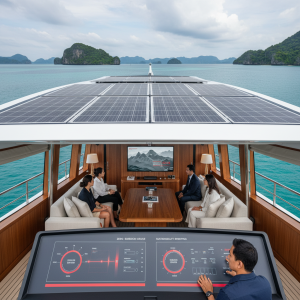
To understand the caliber of these vessels, consider the (hypothetical, yet representative) Aetheria, a 50-meter phinisi that sets the benchmark for the best luxury electric liveaboards in Raja Ampat. Her hull, crafted from Ulin ironwood by master builders in South Sulawesi, conceals a technological marvel: a 750-kWh battery array fed by 180 square meters of high-efficiency solar panels seamlessly integrated into her superstructure. This system powers not only her silent electric motors but the entire onboard experience, from the climate-controlled suites to the Sub-Zero wine fridge. The interior, designed by renowned yacht designer Philippe Briand, features six expansive guest suites, each averaging 40 square meters and boasting a private balcony. The aesthetic is one of understated elegance—hand-woven ikat textiles, sustainably sourced teak, and Italian marble bathrooms. The culinary program is overseen by a chef trained in Michelin-starred kitchens, who crafts bespoke menus from locally sourced ingredients, including yellowfin tuna caught by pole-and-line fishermen that morning. The dive center is a professional-grade facility, equipped with the latest Scubapro gear, a dedicated camera room, and nitrox blending on demand. A full-time marine biologist is on the crew of 18, offering daily lectures and guiding guests on underwater excursions. This is not simply a boat; it is a floating, self-sufficient boutique resort dedicated to delivering an uncompromisingly luxurious and profoundly sustainable journey.
The Diver’s Dream: Curated Underwater Itineraries
Diving is the primary draw for most visitors to Raja Ampat, and an electric liveaboard elevates this experience from extraordinary to sublime. The region’s top dive sites are legendary. At Cape Kri, ichthyologist Dr. Gerald R. Allen famously identified a record-breaking 374 fish species on a single dive. At Manta Sandy, dozens of reef mantas congregate at cleaning stations, performing an aquatic ballet for those patient enough to observe. The challenge with these popular sites is often the presence of other boats. An electric liveaboard, with its unique operational profile, can mitigate this. “We can arrive at a site like Blue Magic before dawn, positioning the yacht silently without disturbing the schools of barracuda and jacks that gather at sunrise,” explains Jean-Luc Moreau, our lead dive instructor. “Our divers are in the water as the reef awakens, long before the sound of other boats arrives.” This silent advantage is even more critical when seeking out timid or rare creatures. The endemic Papuan walking shark, which uses its fins to “walk” across the seabed, is notoriously shy. The absence of engine vibration dramatically increases the chances of a prolonged, natural encounter. Our charters provide unparalleled access to these underwater realms, a core part of our electric yacht raja mpat philosophy. With custom-built dive tenders and a guide-to-guest ratio of 1:3, every dive is tailored, safe, and deeply personal.
Beyond the Reef: The Confluence of Culture and Conservation
A journey through Raja Ampat is about more than just what lies beneath the waves. The experience aboard a premier electric liveaboard is holistic, weaving together adventure, culture, and a genuine commitment to conservation. The silent, emission-free operation is not just an environmental statement; it is a sign of respect for the local communities who have called these islands home for millennia. Our itineraries include visits to remote villages like Arborek, where guests can engage with the community, learn about their seafaring traditions, and purchase intricate handicrafts directly from the artisans. These interactions are carefully managed to be culturally sensitive and economically beneficial. Furthermore, a significant portion of the charter revenue—typically 5%—is channeled directly into local conservation initiatives. This includes funding for the Raja Ampat Sea Centre, which focuses on coral reef restoration, and supporting ranger patrols that protect the marine parks from illegal fishing. Guests are not just passive observers; they are active participants in the preservation of this paradise. They can join the onboard marine biologist in photo-identifying manta rays for a global database or learn about the efforts to protect the nesting grounds of the critically endangered leatherback turtle. This fusion of luxury and purpose creates a travel experience that is not only memorable but meaningful, leaving both the guest and the destination enriched.
Quick FAQ: Planning Your Electric Liveaboard Journey
When is the best time of year to dive in Raja Ampat?
The primary diving season runs from October to April, coinciding with the dry season. During these months, you can expect calm seas and exceptional water visibility, often exceeding 30 meters. However, Raja Ampat is a viable year-round destination, with the summer months offering unique marine life encounters, albeit with a higher chance of rain.
How does an electric yacht handle long-range cruising?
Our vessels employ a sophisticated hybrid-electric system. For silent cruising around islands and over reefs, they run entirely on a state-of-the-art battery bank charged by a massive solar array. For longer open-water crossings or in periods of extended low sunlight, a whisper-quiet, IMO Tier III-compliant generator can recharge the batteries, ensuring 100% operational capability and range without compromising the silent experience at anchor or during activities.
Are these charters suitable for non-divers?
Absolutely. The serene environment of Raja Ampat is a paradise for all nature lovers. Non-diving activities are a core part of the experience and are enhanced by the yacht’s silent mobility. This includes guided kayaking through hidden karst lagoons, stand-up paddleboarding over gardens of shallow-water coral, birdwatching treks to spot the rare Wilson’s Bird-of-Paradise, and culturally immersive village visits. The onboard spa and wellness programs also provide a perfect way to relax and connect with the tranquil surroundings.
What is the booking process and typical cost?
Each journey is a bespoke creation. Charters are exclusively private, ensuring complete privacy and a tailored itinerary. They typically range from 7 to 12 nights. Pricing for a full vessel charter, which includes all gourmet meals, beverages, diving, water sports, and guided excursions for up to 12 guests, generally starts at $85,000 per week. Our team works directly with you to craft an itinerary that matches your specific interests and desires.
The future of travel is not just about where we go, but how we get there. It is about choosing experiences that deepen our connection to the planet rather than diminishing it. An electric liveaboard journey through Raja Ampat is the embodiment of this new philosophy—a seamless blend of technological innovation, uncompromising luxury, and profound respect for the natural world. It is an investment in preservation and a testament to the fact that the greatest luxury of all is to tread lightly. To begin crafting your silent odyssey through the world’s last paradise, explore the fleet at electric yacht raja mpat.