Updated: May 2026
Sailing Raja Ampat on a Sustainable Yacht in November: What to Expect
- Optimal Weather: November brings calm seas and clear skies as the monsoon seasons transition.
- Peak Marine Life: Encounter active manta ray cleaning stations and vibrant coral reefs with visibility often exceeding 30 meters.
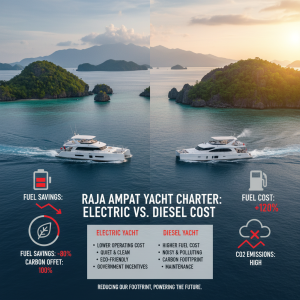
- Sustainable Access: An electric yacht provides silent, emission-free navigation, allowing for closer, undisturbed wildlife encounters.
The only sound is the gentle lapping of turquoise water against the hull and the distant cry of a Papuan hornbill. We are gliding through the limestone karsts of Wayag, the electric motor of our vessel utterly silent. It’s early November, and the air is thick with the scent of salt and damp earth. Below the surface, a universe of color pulses with life. This is not just a trip; it is a full-sensory immersion into Raja Ampat, experienced in the most conscientious way possible. For years, I’ve heard whispers among seasoned travelers that this corner of the Coral Triangle is the last true frontier. They were right. And arriving on a vessel that respects its sanctity changes the very nature of the encounter.
Why November is the Strategic Window for Raja Ampat
Timing is everything in expeditionary travel. While Raja Ampat’s location straddling the equator spares it from extreme seasonal shifts, November represents a strategic sweet spot for any serious voyager. This month marks the transitional period between the southeast and northwest monsoons, a meteorological détente that results in the calmest seas and most predictable weather of the year. The winds die down, creating glassy surfaces perfect for tenders to explore hidden lagoons and for divers to make their entries. Air temperatures hover around a comfortable 31°C (88°F), while the water remains a constant, inviting 29°C (84°F). This predictability is a luxury in such a remote archipelago, which consists of over 1,500 islands scattered across 40,000 square kilometers of ocean.
More critically for underwater enthusiasts, the end of the plankton blooms from the previous season leads to a dramatic increase in visibility. On our dives around the Dampier Strait, we consistently experienced visibility exceeding 30 meters, transforming the seascape into a high-definition spectacle. This clarity allows you to appreciate the sheer scale of the reefs. November also precedes the peak holiday rush of December and January. While the secret of Raja Ampat is certainly out, choosing this shoulder month affords a sense of solitude. We often found ourselves the sole vessel at an anchorage, a rare privilege in a world-class destination. It’s the perfect time for those seeking both optimal conditions and a more intimate connection with the environment, a core tenet of any journey aboard an electric yacht in Raja Ampat.
The Silent Revolution: Navigating on an Electric Yacht
The most profound difference in this journey was not the destination itself, but how we moved through it. Traditional liveaboards, for all their utility, announce their presence with the constant thrum of diesel engines. The experience on an electric yacht is a paradigm shift. As our captain, a seasoned mariner named Adi, explained on our first day, “The silence makes us a guest, not an intruder.” He was not exaggerating. While navigating the narrow channels near Aljui Bay, we were able to approach a flock of Blyth’s hornbills feeding in the canopy without causing them to stir. The absence of engine vibration and noise pollution means marine life remains undisturbed. Pods of dolphins played in our bow wave, and juvenile blacktip reef sharks patrolled the shallows, entirely unconcerned by our passage. This silent propulsion is more than a novelty; it is a fundamental tool for observation.
The ecological benefits are, of course, the primary driver behind this technology. A conventional yacht of similar size can burn upwards of 120 liters of diesel per hour, emitting greenhouse gases and acoustic pollution directly into one of the planet’s most fragile ecosystems. Our vessel, by contrast, ran on a state-of-the-art battery bank, charged by generators when necessary but allowing for hours of emission-free cruising. This commitment extends beyond propulsion. A sophisticated onboard water desalination system eliminates the need for plastic water bottles, and a zero-discharge policy for waste ensures nothing enters the marine park. This approach aligns perfectly with the conservation ethos required to protect a place like Raja Ampat, which, according to authoritative sources, is the global epicenter of marine biodiversity. It reframes luxury not as opulence, but as the privilege of leaving no trace.
The Marine Spectacle: Diving and Snorkeling in Peak Condition
Raja Ampat’s reputation is built on what lies beneath the waves, and in November, the theater is in full production. The clear, calm waters provide the perfect stage. Our first major dive was at Manta Sandy, a famed cleaning station where giant oceanic manta rays, some with wingspans exceeding 5 meters, congregate. We knelt on the sandy bottom 18 meters down and watched as a half-dozen of these majestic creatures hovered gracefully over coral bommies, allowing small wrasse to pick parasites from their gills. The lack of strong currents meant we could stay longer and observe the intricate social behaviors without fatigue. This is a spectacle that draws divers from across the globe, and experiencing it in such pristine conditions felt like a private screening.
The biodiversity is staggering. At Cape Kri, a site legendary since Dr. Gerald R. Allen recorded 374 fish species on a single dive, the reef wall was a living tapestry. Schools of yellow-fin fusiliers, numbering in the thousands, flowed like rivers around us. We spotted no fewer than five pygmy seahorses on a single gorgonian fan, each no larger than a grain of rice. The sheer density of life is almost overwhelming. As described by Indonesia’s official tourism board, the region is home to over 1,600 species of fish and 75% of the world’s known coral species. Even snorkeling here is a world-class experience. At the Arborek Village jetty, the pier pilings are encrusted with vibrant soft corals and harbor immense schools of baitfish, providing an accessible yet profound glimpse into the health of this ecosystem. A sustainable sailing adventure in Raja Ampat is a diver’s ultimate pilgrimage.
Beyond the Reefs: Onshore Exploration and Avian Wonders
While the marine environment is the main draw, the terrestrial experiences in Raja Ampat are equally compelling. The iconic image of the archipelago—a cluster of mushroom-shaped limestone islands set in a turquoise lagoon—is best viewed from the summit of Piaynemo. The journey to the top involves a well-maintained wooden staircase of approximately 320 steps. It’s a hot, humid climb, but the reward is one of the most remarkable vistas in Southeast Asia. From the viewing platform, you can appreciate the complex geography of the karsts, sculpted by millennia of rainfall and tidal flows. Our guide pointed out how the yacht’s silent electric motor allowed us to anchor in a shallow, protected bay inaccessible to larger vessels, giving us first access to the trail before anyone else arrived.
The islands are also a haven for ornithologists. November is an active period for the region’s most famous avian residents: the birds-of-paradise. On an early morning trek into the forests of Waigeo Island, we were guided to a lek, a specific clearing where the male Red Bird-of-Paradise performs its elaborate mating dance. Hiding in a blind built from palm fronds, we watched as the male, with its iridescent green face and flowing crimson plumes, danced and called to attract a mate. It’s a rare and hypnotic display of natural selection at its most flamboyant. This focus on both marine and terrestrial wonders is a hallmark of a well-curated expedition, something that the crew of our electric yacht raja mpat had perfected into an art form.
The Logistical Edge of a Bespoke Sustainable Voyage
Executing a seamless journey in a region as remote as Raja Ampat requires deep logistical expertise. The journey begins with a flight into Sorong (SOQ), the gateway city in West Papua. From there, a private transfer takes you directly to the harbor where the yacht awaits. Once aboard, every detail is managed. The true luxury of a vessel like this is not just in the high thread-count linens or the gourmet meals prepared by the onboard chef, but in the intelligent design of the experience. The menu, for instance, featured locally sourced fish and produce from nearby island communities, reducing our supply chain footprint and directly supporting the local economy.
The yacht’s shallow draft and maneuverability, combined with the crew’s encyclopedic knowledge of the area, granted us access to secluded coves and anchorages that are simply off-limits to larger cruise ships or more conventional liveaboards. One evening, we anchored in a hidden bay in the Fam Islands, dining on deck under a blanket of stars, miles from any other sign of human activity. This level of exclusivity is the ultimate luxury. Furthermore, the crew handled all the necessary permits, including the mandatory Marine Park Entry Tag (known as a PIN), which costs IDR 700,000 (about $45 USD) for international visitors. The funds from this fee are crucial for financing the conservation patrols and community programs that protect this UNESCO-recognized biosphere. It’s a direct investment in the preservation of the paradise you are there to witness.
Quick FAQ: Your November Raja Ampat Voyage
What is the water temperature in Raja Ampat in November?
The water is consistently warm and comfortable, averaging 28-30°C (82-86°F). For most people, a 3mm shorty wetsuit is more than sufficient for long dives, while many are comfortable in just a rash guard for snorkeling.
Do I need to be an expert diver to enjoy the trip?
Not at all. The calm and clear conditions of November are ideal for all experience levels. The dive masters on an electric yacht raja mpat are adept at tailoring experiences, from introductory dives in protected bays to challenging drift dives for seasoned experts. Snorkelers will find that many of the most vibrant reefs, like those around Arborek Jetty, are in shallow water, offering a world-class experience without needing a tank.
How crowded is Raja Ampat in November?
November is the beginning of the prime season but acts as a strategic shoulder period. You benefit from the excellent weather while avoiding the peak crowds that arrive for the Christmas and New Year holidays. It offers a far more exclusive and serene experience than traveling just one month later.
What about packing for a sustainable yacht trip?
The ethos is to pack light and responsibly. Bring lightweight, quick-drying clothing, a hat, and polarized sunglasses. The most critical item is reef-safe sunscreen, as conventional sunscreens contain chemicals like oxybenzone that are devastating to coral. The yacht provides high-quality, biodegradable toiletries to further minimize your environmental footprint.
To sail through Raja Ampat in November is to witness a world at its most vibrant, a living Eden both above and below the water. To do so on a vessel that moves with silent, clean energy is to become a part of that ecosystem, not just an observer of it. It is an experience that resonates long after you have returned home, a new benchmark for what conscientious luxury travel can and should be. The intricate dance of nature’s finest work awaits. To truly comprehend the silent majesty of these waters, you must experience it for yourself. Planning your own journey aboard an electric yacht raja mpat is the first step toward the voyage of a lifetime.